


使徒行傳 15:22-41 必要的分開
- 馬克牧師

- Jun 4, 2024
- 11 min read
Updated: Jun 15, 2024
會議的覆函
22那時,使徒和長老並全教會定意從他們中間揀選人,差他們和保羅、巴拿巴同往安提阿去;所揀選的就是稱呼巴撒巴的猶大和西拉。這兩個人在弟兄中是作首領的。 23於是寫信交付他們,內中說:「使徒和作長老的弟兄們問安提阿、敘利亞、基利家外邦眾弟兄的安。 24我們聽說,有幾個人從我們這裏出去,用言語攪擾你們,惑亂你們的心。其實我們並沒有吩咐他們。 25所以,我們同心定意,揀選幾個人,差他們同我們所親愛的巴拿巴和保羅往你們那裏去。 26這二人是為我主耶穌基督的名不顧性命的。 27我們就差了猶大和西拉,他們也要親口訴說這些事。 28因為聖靈和我們定意不將別的重擔放在你們身上,惟有幾件事是不可少的, 29就是禁戒祭偶像的物和血,並勒死的牲畜和姦淫。這幾件你們若能自己禁戒不犯就好了。願你們平安!」
30他們既奉了差遣,就下安提阿去,聚集眾人,交付書信。 31眾人念了,因為信上安慰的話就歡喜了。 32猶大和西拉也是先知,就用許多話勸勉弟兄,堅固他們。 33住了些日子,弟兄們打發他們平平安安地回到差遣他們的人那裏去。 35但保羅和巴拿巴仍住在安提阿,和許多別人一同教訓人,傳主的道。
保羅和巴拿巴分手
36過了些日子,保羅對巴拿巴說:「我們可以回到從前宣傳主道的各城,看望弟兄們景況如何。」 37巴拿巴有意要帶稱呼馬可的約翰同去; 38但保羅因為馬可從前在旁非利亞離開他們,不和他們同去做工,就以為不可帶他去。 39於是二人起了爭論,甚至彼此分開。巴拿巴帶着馬可,坐船往塞浦路斯去; 40保羅揀選了西拉,也出去,蒙弟兄們把他交於主的恩中。 41他就走遍敘利亞、基利家,堅固眾教會。
各位平安,我們今天讀的是《使徒行傳》第15章的下半部分。昨天我們讀到,在耶路撒冷的會議上,所有人都認同了耶穌的恩典才是我們稱義的關鍵。我們的稱義不再是靠人的行為或我們自己的作為,而是完全因為耶穌在世上完成的偉大工作,這完全是因祂的恩典。
從此以後,因信稱義的原則被確立。也因為這個原因,猶太人和外邦人之間不再有區別,外邦人不再需要遵守摩西律法,而猶太人也不再需要律法作為稱義的關鍵。
因此,耶路撒冷的會議寫了一封信,去勸告外邦信徒。信中指出,律法已經不再是關鍵,但還是有一些重要的原則需要遵守。我們可以來看看這些重要的原則分別是什麼。
首先是關於避免偶像崇拜、禁戒姦淫、避開勒死的牲畜。其實重點就只有這三件事情。
首先,關於偶像崇拜,這是上帝非常忌諱的一件事情。是因為當我們把任何事情放在上帝之上或放在上帝之前時,我們就會犯一個非常大的錯誤,那就是把自己或那個偶像當成了上帝。這樣的後果,其實傷害最大的是我們自己。
不論我們的偶像是什麼,可能是金錢、地位,甚至是自己或我們所看重的一些事情。總而言之,只要我們把任何事情放在上帝之前,結果都會對我們造成更大的危害。而上帝不希望看到我們被偶像給帶離真道。因此首要的關鍵就是避免偶像崇拜。
第二件很關鍵的事情就是要避免淫行,因為這種事情會傷害自己的身體和關係。在古代社會,這種行為非常普遍,而基督教是第一個提出要守住貞潔,保護自己的身體,不隨意犯淫行的信仰。
當我們了解社會的最基礎是家庭,而家庭關係的穩固源自於夫妻之間的忠誠。當家庭關係穩固,社會這個最小且最重要的單位才會穩固。因此,當我們看今天所宣揚的一些所謂的性自由,其實存在很大的問題,因為人們往往是在找藉口來放縱自己的慾望。當我們看到那些提倡所謂性自由的人時,我們要相當謹慎。當我們把男女之間的關係混亂了,把人與人之間的關係混亂時,其實我們就把原本聖潔的人性降格為獸性。當我們無法控制自己的身體、無法控制自己的慾望時,我們就變得越來越像動物,而不是有靈性的人類。任何把所謂性自由高舉到可以任意妄為的人,實際上都是很危險的。
最後,關於避免食用血和勒死的牲畜這件事情。在猶太人的文化中,宰殺牲畜時必須放盡血才能食用。血代表生命,而生命屬於上帝。因此,當血被放掉,生命就消失了,這樣才能符合猶太人的規範。
然而,外邦人不一定遵守這個規定,有時候會把血留在動物體內。這種做法有兩個問題。首先,在靈性上,它無法象徵生命歸於上帝。其次,從衛生角度來看,古代的處理方式可能不夠衛生。如果血沒有放掉,血液中可能會帶有病菌和寄生蟲,這樣並不是一種健康的飲食方式。
因此,這一點也是非常重要的,既涉及到靈性的純潔,也關乎健康和衛生。
所以,我們看到猶太人的議會將原本古代那麼多的律法和規條全部放棄,只簡簡單單地依照這些原則,要求外邦基督徒遵守這幾個核心觀念。這些原則其實已經非常重要,今天的信徒們也是依此為準則。
當我們看這三件事情的時候,我們可以思想到,這些道理在今天依然適用。
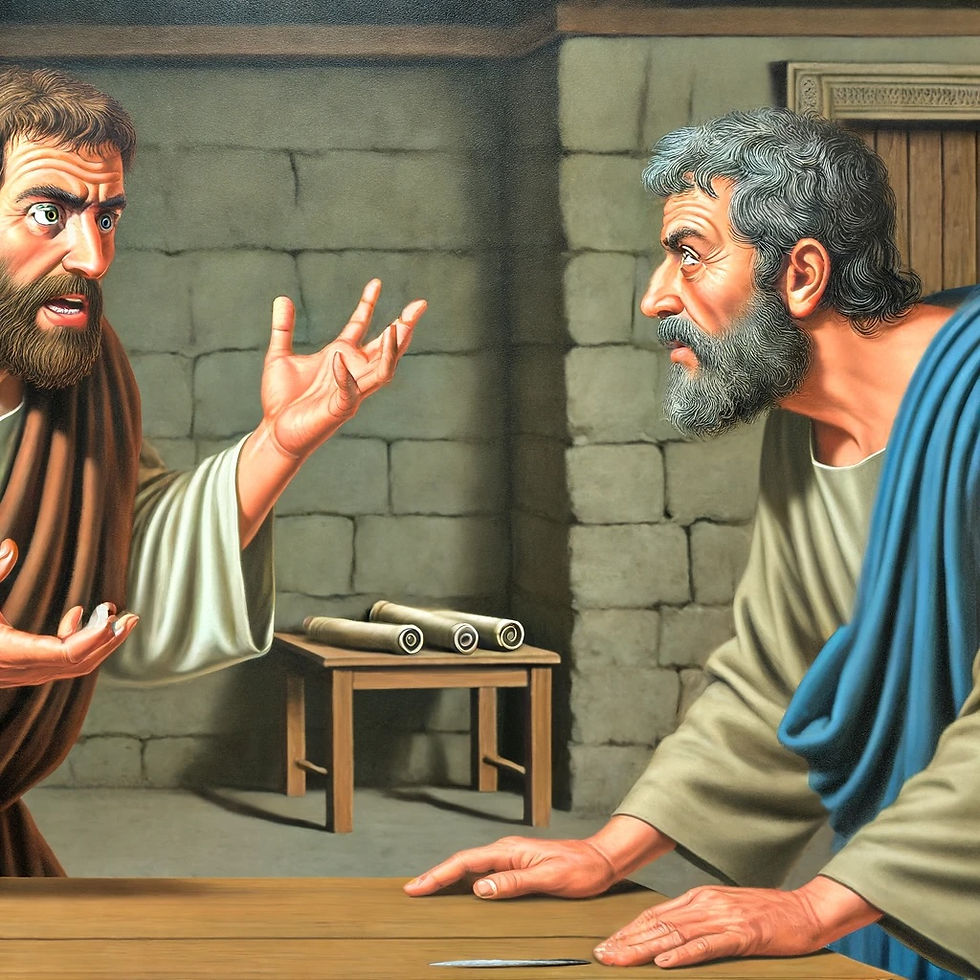
在《使徒行傳》第15章的最後,我們還看到了一件看起來令人遺憾的事情,就是保羅和巴拿巴之間起了爭論。他們計劃回到各城去探望信徒,巴拿巴希望帶著馬可一起回去。然而,保羅還記得當時馬可在旁非利亞時離開他們,放棄了那段宣教之旅。這件事情讓保羅非常不滿,所以他不願意讓馬可一起參加這次宣教之旅。
這件事引發了保羅和巴拿巴之間相當大的爭執,最終他們決定分道揚鑣,不再一起傳道。
在教會中,我們也可能會看到因為某些原因引發的爭執和爭論,導致教會的分裂、一些同工的離開,或者原本好的團隊分裂。當我們單單看這些事件時,可能會感到遺憾。但幸好,這段故事有後續發展,就像我們所說的,保羅在後來的提摩太書裡特別提到了馬可,而巴拿巴應該是用勸告和信心讓馬可回頭。最後,馬可也成為了教會的重要領袖,這個曾經逃跑過的少年後來成為了教會的中流砥柱,甚至成為福音書的作者。
當我們看每一段歷史時,都會看到人性的軟弱,但我們不應該只把人性的軟弱當成結局。我們看到彼得曾經跌倒,但彼得也重新站起來;我們看到馬可曾經逃跑,但馬可後來成為了重要人物。所以,記得我們不要急著論斷任何人。我們要記得,上帝的手一直在看顧,上帝也一直在帶領。
後來,巴拿巴和保羅分別在不同的地方繼續建造教會,成就了偉大的事工。因此,我們要珍惜每一位與我們一起服事的同工,因為在各種原因和不同的時空下,你們可能會不再一起。我們要珍惜每一段共同服事的機會,當我們分離時,也要盡量保持祝福,而不是懷恨或怨恨。
這段故事給我們相當大的啟發,也希望這段故事能夠給我們鼓勵。在我們看到同工來來去去的過程中,我們要永遠把信心放在上帝的身上。感謝各位的聆聽。
從第16章開始,我們將進入保羅的第二次宣教之旅。接下來,保羅將開始前進歐洲,抵達希臘。這是一個非常重大的事件,因為我們看到福音從亞洲開始傳到非洲,接下來要傳到歐洲了。感謝各位的聆聽!
The Council’s Letter to Gentile Believers
Then the apostles and elders, with the whole church, decided to choose some of their own men and send them to Antioch with Paul and Barnabas. They chose Judas (called Barsabbas) and Silas, men who were leaders among the believers. With them they sent the following letter:
The apostles and elders, your brothers,
To the Gentile believers in Antioch, Syria and Cilicia:
Greetings.
We have heard that some went out from us without our authorization and disturbed you, troubling your minds by what they said. So we all agreed to choose some men and send them to you with our dear friends Barnabas and Paul—men who have risked their lives for the name of our Lord Jesus Christ. Therefore we are sending Judas and Silas to confirm by word of mouth what we are writing. It seemed good to the Holy Spirit and to us not to burden you with anything beyond the following requirements: You are to abstain from food sacrificed to idols, from blood, from the meat of strangled animals and from sexual immorality. You will do well to avoid these things.
Farewell.
So the men were sent off and went down to Antioch, where they gathered the church together and delivered the letter. The people read it and were glad for its encouraging message. Judas and Silas, who themselves were prophets, said much to encourage and strengthen the believers. After spending some time there, they were sent off by the believers with the blessing of peace to return to those who had sent them. But Paul and Barnabas remained in Antioch, where they and many others taught and preached the word of the Lord.
Disagreement Between Paul and Barnabas
Some time later Paul said to Barnabas, “Let us go back and visit the believers in all the towns where we preached the word of the Lord and see how they are doing.” Barnabas wanted to take John, also called Mark, with them, but Paul did not think it wise to take him, because he had deserted them in Pamphylia and had not continued with them in the work. They had such a sharp disagreement that they parted company. Barnabas took Mark and sailed for Cyprus, but Paul chose Silas and left, commended by the believers to the grace of the Lord. He went through Syria and Cilicia, strengthening the churches.
Peace be with you all. Today we are reading the second half of Acts Chapter 15. Yesterday, we read that during the council in Jerusalem, everyone agreed that the grace of Jesus is the key to our justification. Our justification is no longer based on human actions or our own deeds, but entirely on the great work Jesus accomplished on earth, which is purely due to His grace.
From then on, the principle of justification by faith was established. Because of this, there was no longer any distinction between Jews and Gentiles. Gentiles no longer needed to follow the Mosaic law, and Jews no longer needed the law as the key to justification.
Therefore, the Jerusalem council wrote a letter to advise the Gentile believers. The letter stated that the law was no longer the key, but there were still some important principles to follow. Let's take a look at what these important principles are.
First, there is the matter of avoiding idolatry, abstaining from sexual immorality, and avoiding meat from strangled animals. These are the three main points.
First, regarding idolatry, this is something God greatly forbids. The reason is that when we place anything above or before God, we make a grave mistake by treating ourselves or that idol as God. The greatest harm in such behavior actually falls on us.
No matter what our idol is—whether it’s money, status, or even ourselves or things we highly value—if we place anything before God, it will ultimately cause greater harm to us. God does not want to see us led astray by idols. Therefore, the primary principle is to avoid idolatry.
The second crucial issue is to avoid sexual immorality, as it harms both our bodies and relationships. In ancient society, such behavior was very common, and Christianity was the first to advocate for maintaining purity, protecting our bodies, and not committing sexual immorality casually.
When we understand that the foundation of society is the family, and the stability of family relationships comes from the fidelity between spouses, we see that stable family relationships ensure the stability of society’s smallest and most important unit. Therefore, when we look at the so-called sexual freedom promoted today, we see a significant problem because people are often seeking excuses to indulge their desires. When we see those advocating for so-called sexual freedom, we need to be very cautious. When we disorder the relationships between men and women, and between people, we degrade our originally holy humanity to bestiality. When we cannot control our bodies and desires, we become more like animals rather than spiritual human beings. Elevating sexual freedom to a level where it allows for wanton behavior is extremely dangerous.
Lastly, regarding the avoidance of consuming blood and meat from strangled animals, in Jewish culture, the blood must be completely drained when slaughtering animals before it can be consumed. Blood represents life, and life belongs to God. Therefore, when the blood is drained, the life is taken away, adhering to Jewish regulations.
However, Gentiles did not necessarily follow this rule, and sometimes they left the blood in the animals. This practice had two problems. Firstly, spiritually, it failed to symbolize life belonging to God. Secondly, from a health perspective, the ancient processing methods might not have been hygienic. If the blood was not drained, it could contain bacteria and parasites, making it an unhealthy dietary practice.
Thus, this principle is very important, both for spiritual purity and for health and hygiene.
Therefore, we see that the Jewish council abandoned many ancient laws and regulations and simply required Gentile Christians to follow these core principles. These principles are indeed very important, and today’s believers also follow these guidelines.
When we consider these three matters, we realize that these principles are still relevant today.
At the end of Acts Chapter 15, we also see a somewhat regrettable event where Paul and Barnabas had a dispute. They planned to visit the believers in various towns, and Barnabas wanted to take Mark along. However, Paul remembered that Mark had left them in Pamphylia and abandoned the mission trip, which greatly displeased Paul. Therefore, he did not want Mark to join them on this mission trip.
This disagreement led to a significant argument between Paul and Barnabas, and they ultimately decided to part ways and no longer travel together.
In the church, we may also see disputes and arguments arising for various reasons, leading to division, the departure of some coworkers, or the splitting of originally strong teams. When we look at these events alone, we might feel regret. But fortunately, this story has a continuation. As we mentioned, Paul later mentioned Mark specifically in his letters to Timothy, and Barnabas likely used encouragement and faith to bring Mark back. Eventually, Mark became an important leader in the church, this once runaway youth became a pillar of the church, and even the author of the Gospel of Mark.
When we examine each historical moment, we see human weakness, but we should not regard human weakness as the conclusion. We see that Peter once fell, but he rose again; we see that Mark once ran away, but he later became an important figure. So, we should not be quick to judge anyone. We must remember that God’s hand is always guiding, and He is always leading.
Later, Barnabas and Paul continued to build the church and accomplish great works in different places. Therefore, we should cherish every coworker who serves with us, because various reasons and different times may lead us to not be together anymore. We should treasure every opportunity to serve together, and when we part ways, strive to bless each other instead of holding grudges or resentment.
This story gives us significant inspiration, and we hope it encourages us. As we see coworkers come and go, we must always place our faith in God. Thank you all for listening.
Starting from Chapter 16, we will enter Paul’s second missionary journey. Next, Paul will begin advancing to Europe, reaching Greece. This is a very significant event, as we see the Gospel spreading from Asia to Africa, and now to Europe. Thank you all for listening!


Comments